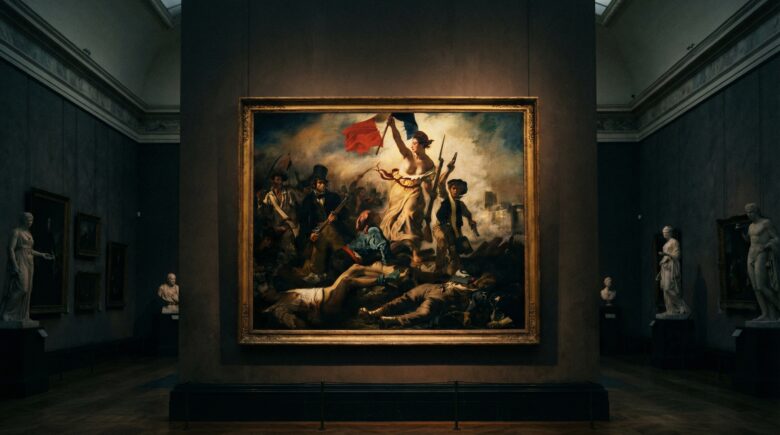
Movies like Red Notice or Lupin make robbing the Louvre look incredibly stylish. The thief usually wears a tuxedo and dodges sophisticated laser beams before escaping in a sports car. However, reality is much more boring and usually unsuccessful. Modern technology and expert training make the Hollywood version of a heist impossible. Understanding the different layers of Louvre Museum security explains why almost no one tries to rob it anymore.
Layer 1: The Human Element of Louvre Museum Security
The museum employs over 1,000 security officers who are stationed everywhere. While some wear recognizable uniforms, many others wear plain clothes and circulate constantly among the visitors. These professionals are specifically trained to watch for suspicious behavior.
If you linger too long near a camera or appear nervous, they will certainly notice you. Furthermore, they communicate constantly by radio. If a suspect decides to run, they simply cannot outrun a radio signal that can alert every exit in seconds.
Layer 2: Advanced Technology and Sensors
The laser beams you see in movies are real, but they are just the start of the Louvre Museum security arsenal.
- Vibration Sensors: Most paintings have hidden sensors. If you even touch the frame, an alarm triggers immediately.
- CCTV Coverage: High-definition cameras cover almost every inch of the gallery space. This footage is monitored live by a dedicated team.
- Physical Barriers: Major works like the Venus de Milo have large barriers. You cannot physically reach them without climbing, which would immediately draw attention.
Layer 3: The Lockdown Protocol
This is the ultimate weapon used by the museum. The entire building is a fortress that can be sealed in an instant. If an alarm triggers, the exits seal with heavy steel doors.
Because the Louvre is a complex maze, a thief would likely get lost before finding an exit. Even if you manage to grab a painting, you cannot get out once the building is locked. Within minutes, the police can surround the entire perimeter. Consequently, a thief is trapped inside with the guards until they are caught.
The Myth of the Secret Buyer
The biggest myth in movies is the existence of a shadowy billionaire buyer. This is often called the “Dr. No” fallacy. In reality, this market does not exist for stolen masterpieces.
First, you simply cannot sell a famous work. Everyone in the world knows the Mona Lisa, so it is essentially worthless to a thief. You cannot sell it at an auction house or to a legitimate gallery. Second, a rich collector wants to show off their art rather than hide it in a basement. Most thieves eventually try to demand a ransom from an insurance company, but police usually catch them during the negotiation process.
Summary: Hollywood vs. Reality
- Lasers: These are a real part of Louvre Museum security.
- Tuxedos: These are fake and would only make a thief stand out.
- Secret Buyers: These do not exist in the real art world.
- Getting Caught: This is almost guaranteed due to the layers of protection.
You can certainly enjoy the movies, but you must respect the reality of the situation. The Louvre remains one of the most secure buildings on Earth.
Has anyone ever beaten the system?
While modern lasers and lockdown protocols make the “movie-style” heist impossible, history shows that real-life thieves don’t wear tuxedos , they look for simple human errors. To see what happens when the layers of security actually fail, read the chilling account of the last successful major heist in the museum’s history The True Story of the 1998 Louvre Robbery and the Corot Theft.