You look at her and she smiles back. However, when you look away and then look back again, the smile is suddenly gone. This elusive effect sits at the very heart of the Mona Lisa smile mystery. It has confused art lovers for over 500 years. Is she mocking the viewer, is she sad, or is she simply bored? Fortunately, science and art historians now understand exactly how Leonardo da Vinci created this effect. It is not magic but is instead a masterpiece of optics and biology.
The Role of Peripheral Vision in the Mystery
Margaret Livingstone, a neuroscientist at Harvard, studied the painting to understand the Mona Lisa smile mystery through human biology. She found that the smile actually changes based on where you focus your eyes. When you look directly at her mouth, your eyes focus on the fine details. Consequently, the soft shadows around her lips seem to disappear and the smile looks flat or even serious.
However, when you look at her eyes, your peripheral vision takes over. Because peripheral vision picks up shadows better than fine details, the soft shadows at the corners of her mouth look like an upward curve. This makes her seem to smile broadly. The genius of Leonardo is that the smile is a ghost that appears only when you do not look directly at it.
The Smoke Technique Called Sfumato
Leonardo used a specific painting technique called sfumato, which comes from the Italian word for smoke. He applied layers of translucent paint that were thinner than a human hair to create a hazy effect. This technique successfully blurred the edges of the mouth and eyes so there are no hard lines in her face.
The corners of her lips simply vanish into the shadow. Because of this lack of definition, the expression is left completely open to interpretation. Your brain has to fill in the gaps for itself. If you are happy, you might see a smile, but if you are sad, you might see sadness. The painting essentially reflects your own emotions back at you.
Landscape Illusions and Perspective Tricks
The background adds another fascinating layer to the Mona Lisa smile mystery. If you look closely at the horizon line behind her, you will notice the landscape on the left side is lower than the landscape on the right side. While this is physically impossible in the real world, it creates a subtle trick in the painting.
On the left side, her head sits higher in the frame so she looks dominant. On the right side, she sinks slightly lower so she looks more grounded. This mismatch keeps your eyes moving across the canvas. Since you cannot settle on a single perspective, the figure feels alive and creates a sense of curiosity that keeps you staring.
Hidden Symbols and the Meaning of the Portrait
Many people love to find secret codes within the Mona Lisa smile mystery. While some theories are wild, others have intriguing evidence. High resolution scans found tiny letters painted in her eyes, such as an L for Leonardo. Some historians even claim a small bridge in the background identifies the location as a village in northern Italy.
The biggest mystery is the attachment of the artist to the work. Leonardo never gave the painting to the client who paid for it and instead kept it until he died. Some believe he viewed it as a lifelong test of his skill. He continued to perfect the Mona Lisa smile mystery for over fifteen years by treating it more like a science experiment than a simple portrait.
Why the Mystery Endures
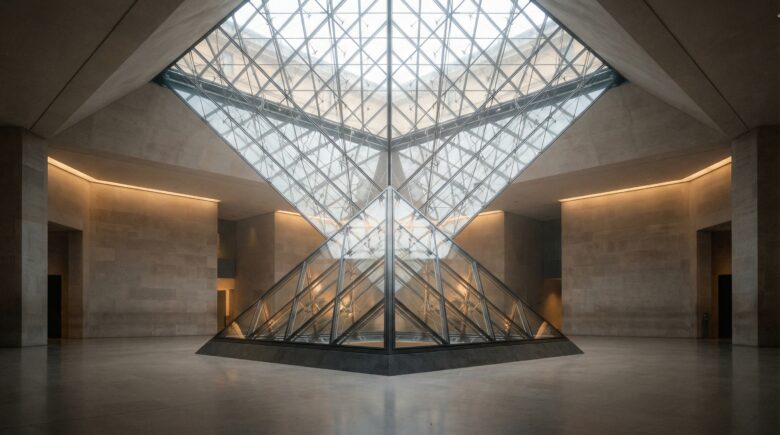
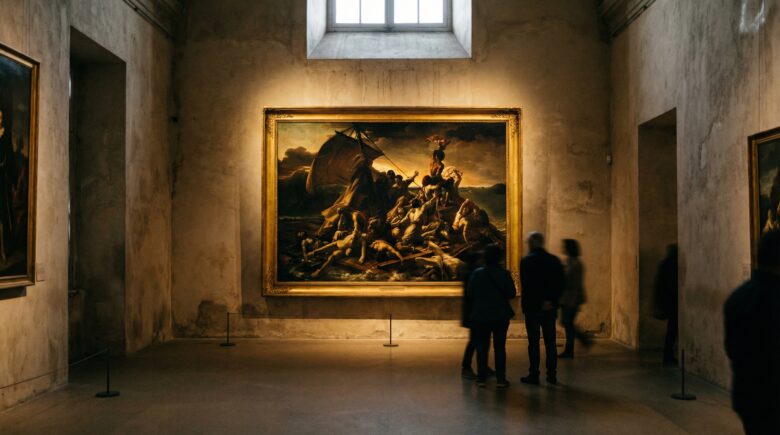
The Mona Lisa is not just a picture of a woman but is a study of how humans see the world. Leonardo successfully hacked the human visual system to create an image that changes every time you blink. That is exactly why millions of people still line up in the Louvre to solve the puzzle for themselves.