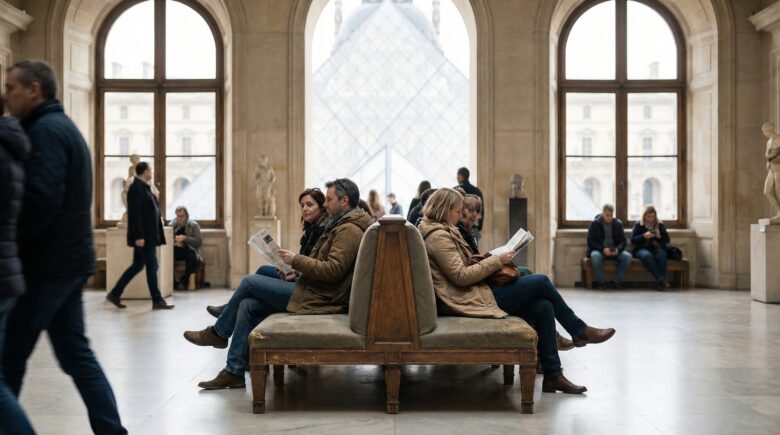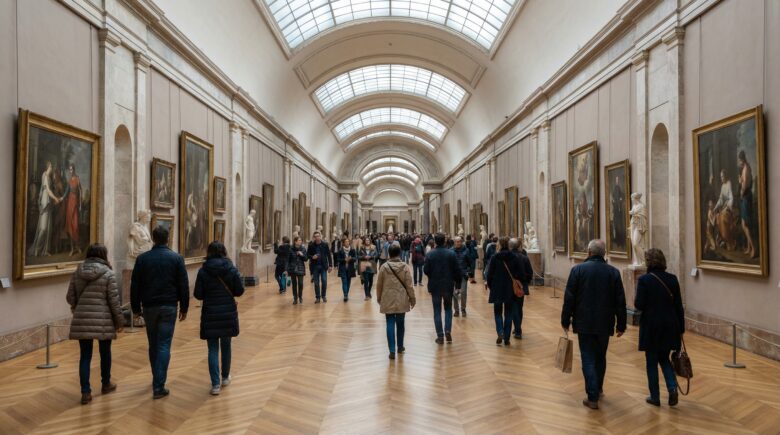
Paintings are inherently flat, yet sculptures occupy a unique physical space that allows you to experience art in three dimensions. The Louvre is home to some of the most celebrated carved stone in human history. You can walk around these works and see exactly how the light hits the ancient marble. Consequently, the sculpture collection is just as important as the world-famous painting collection.
You should dedicate at least one hour specifically to these statues during your visit. Here are the key pieces you need to find, including the legendary image of Alexander the Great in the Louvre.
Finding Alexander the Great in the Louvre (The Azara Herm)
Many visitors search specifically for the face of history’s greatest conqueror. You can find the portrait of Alexander the Great in the Louvre by visiting the Department of Greek, Etruscan, and Roman Antiquities. This famous marble bust is known as the “Azara Herm.”
While this is not a giant statue, it is a modest and highly significant portrait head. It is considered one of the only surviving portraits that was likely based on an original work by Lysippos, who was Alexander’s personal sculptor. The carving shows his characteristic hairstyle and intense gaze. It successfully connects you directly to the life of the Macedonian king.
The Venus de Milo: Superstar of the Sully Wing
The Venus de Milo is undoubtedly the superstar of the Sully Wing. Dating back to 100 BC, this Greek statue represents the goddess Aphrodite. She is world-famous for her missing arms and her elegant spiral composition.
As you walk toward her, you should notice how the figure twists in space. She looks different from every angle because the artist used a complex three-dimensional pose. The fabric draped around her hips looks incredibly heavy and realistic even though it consists of hard stone. She stands alone at the end of a long corridor to highlight her immense importance.
The Dramatic Winged Victory of Samothrace
This is arguably the most dramatic object in the entire museum. It stands triumphantly at the top of the Daru Staircase. The work depicts the goddess Nike as she lands on the prow of a ship.
Although the statue is headless and armless, this damage actually adds to the mystery and power of the piece. The wind appears to press her wet clothes against her body while her wings stretch back. The setting is perfect because you must look up at her as you climb the stairs. This is exactly how ancient sailors would have looked up at a statue of victory on a real cliffside.
Michelangelo and the Dying Slave
You do not need to travel to Italy to see the work of Michelangelo. The museum owns two of his “Slave” statues and the Dying Slave is the most famous. It is located on the ground floor of the Denon Wing.
Interestingly, the figure does not look like he is dying in pain. Instead, he looks like he is in a deep dream state. The body is perfect and idealized according to the standards of the Renaissance. Because Michelangelo left some parts of the stone unfinished, you can still see the tool marks. This gives you a fascinating glimpse into his creative process.
Quick Sculpture Checklist
- Alexander the Great: Located in the Sully Wing, Ground Floor (Antiquities).
- Venus de Milo: Found in the Sully Wing, Ground Floor.
- Winged Victory: Situated in the Denon Wing at the Main Staircase.
- Psyche Revived by Cupid’s Kiss: Located in the Richelieu Wing, Ground Floor.
Statues allow you to see the human form through the eyes of the ancients. By visiting Alexander the Great in the Louvre and these other masterpieces, you can experience the true scale of history.
You must plan your visit carefully to see these marble masterpieces without the crowds. The museum is huge and requires a lot of walking. You should check the schedule before you arrive to avoid disappointment. Some wings close early on specific days of the week. Read our guide to Everything You Need to Know About Louvre Museum Hours to find the best time for your tour.